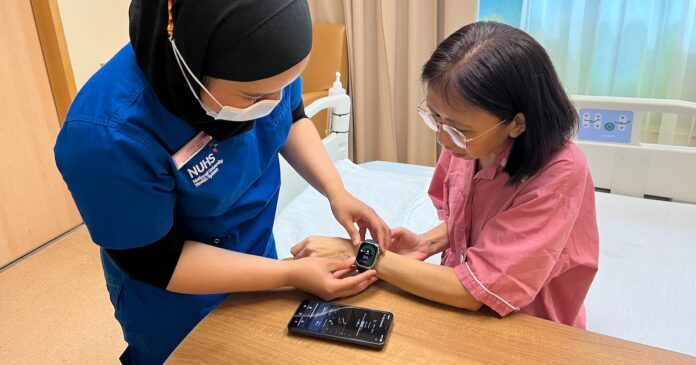




Singapore’s National University Health System (NUHS) has signed a strategic agreement with GSMA Foundry to extend 5G private networks across its cluster, aiming to accelerate deployment of extended reality, robotics and other emerging technologies. The integration plan links 5G with digital twins, XR, IoT devices and ambient AI to enable low-latency, high-bandwidth pipelines for real-time imaging, remote procedures and continuous monitoring, positioning the cluster as a testbed for AI-driven clinical workflows.
NUHS expects the architecture to speed innovation in diagnostics, workflow automation and robotic-assisted care while improving population-level planning through digital-twin simulations. The proposal underscores healthcare AI’s dependence on networked infrastructure and raises governance priorities—data security, interoperability and regulatory oversight—before scaled clinical adoption. Stakeholders see private 5G and ambient AI as complementary enablers that could reduce latency constraints for bedside inference and support distributed AI models across the regional health system.